

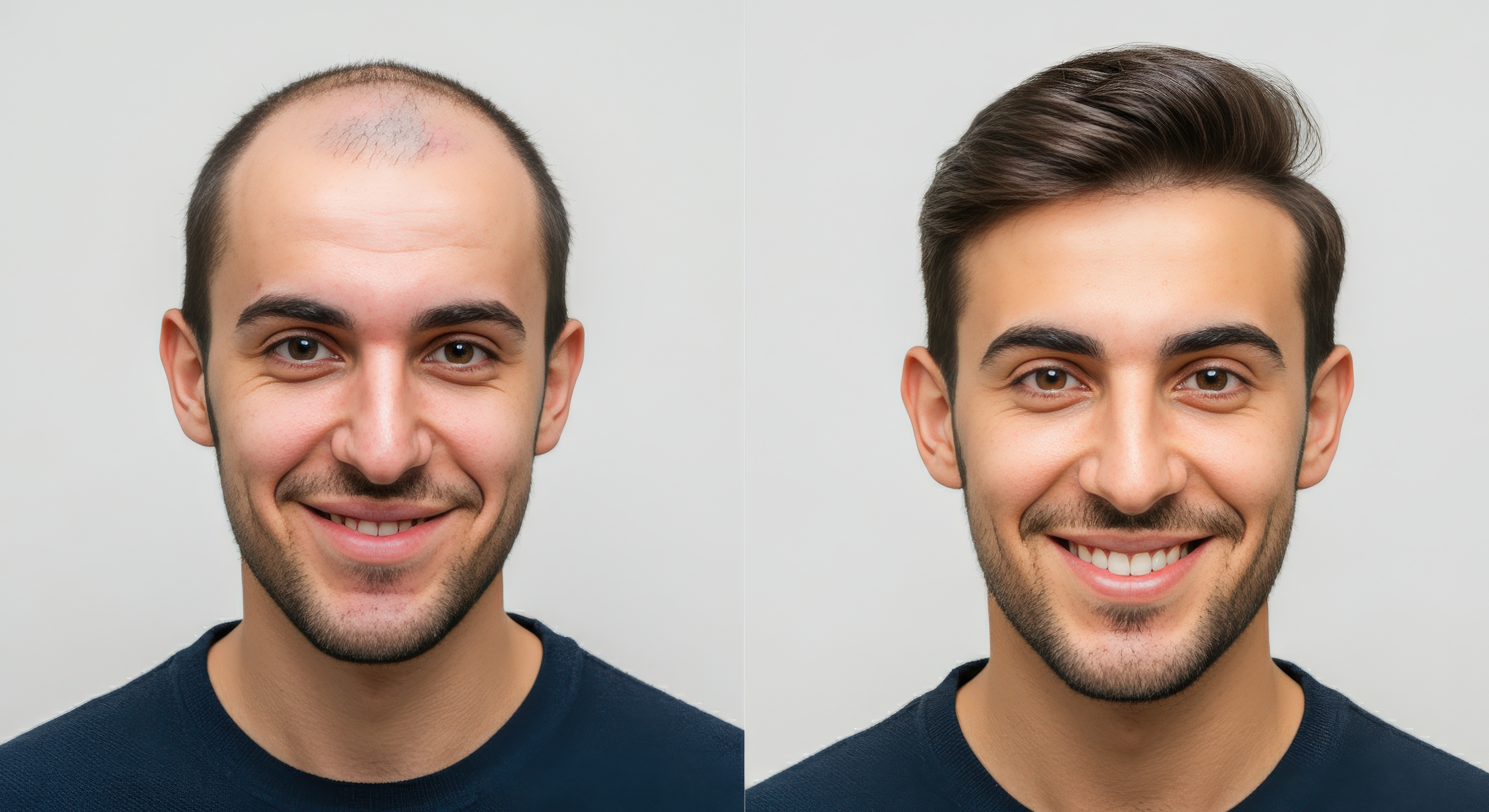
FUE vs DHI Hair Transplant in Coimbatore – Which One Is Right for You?
You've made one of the most important decisions - you want a hair transplant. But now you're stuck at another question that nobody seems to answer clearly: FUE or DHI - which one is better?
You search online. One clinic says FUE is the gold standard. Another says DHI gives better results. A third says it all depends on your scalp. And suddenly, what started as a simple decision becomes confusing.
This guide is written to completely resolve that confusion. By the time you finish reading, you will know exactly what FUE and DHI are, how they differ, which one suits your specific hair loss condition, and what to expect in terms of cost and recovery here in Coimbatore.
Let's break this down properly.
Quick Answer
| Technique | Best For |
|---|---|
| FUE | Large bald areas, high graft count, maximum coverage |
| DHI | Precise hairline, beard restoration, targeted density |
| Hybrid FUE + DHI | Advanced hair loss needing both coverage and precision |
The right technique is always determined by a proper scalp analysis — not by trends or clinic preference. The best choice depends entirely on your scalp condition, hair loss stage, and personal goals.
How Does Hair Transplant Actually Work?
Before comparing FUE and DHI, it helps to understand what both are trying to achieve.
Hair transplantation is the process of relocating healthy, DHT-resistant hair follicles from your donor area (usually the back and sides of the scalp) to the thinning or bald areas.
The transplanted follicles are genetically programmed to resist hair fall. That's why results are permanent. Once they settle and grow, they behave exactly like your natural hair. You can wash, cut, and style them freely.
The difference between FUE and DHI lies not in what is transplanted, but in how the follicles are extracted and implanted.
The FUE Technique: Designed for Coverage and Density
FUE, or Follicular Unit Extraction, is one of the most widely performed hair transplant techniques worldwide because of its ability to restore hair across larger areas while maintaining natural-looking results.
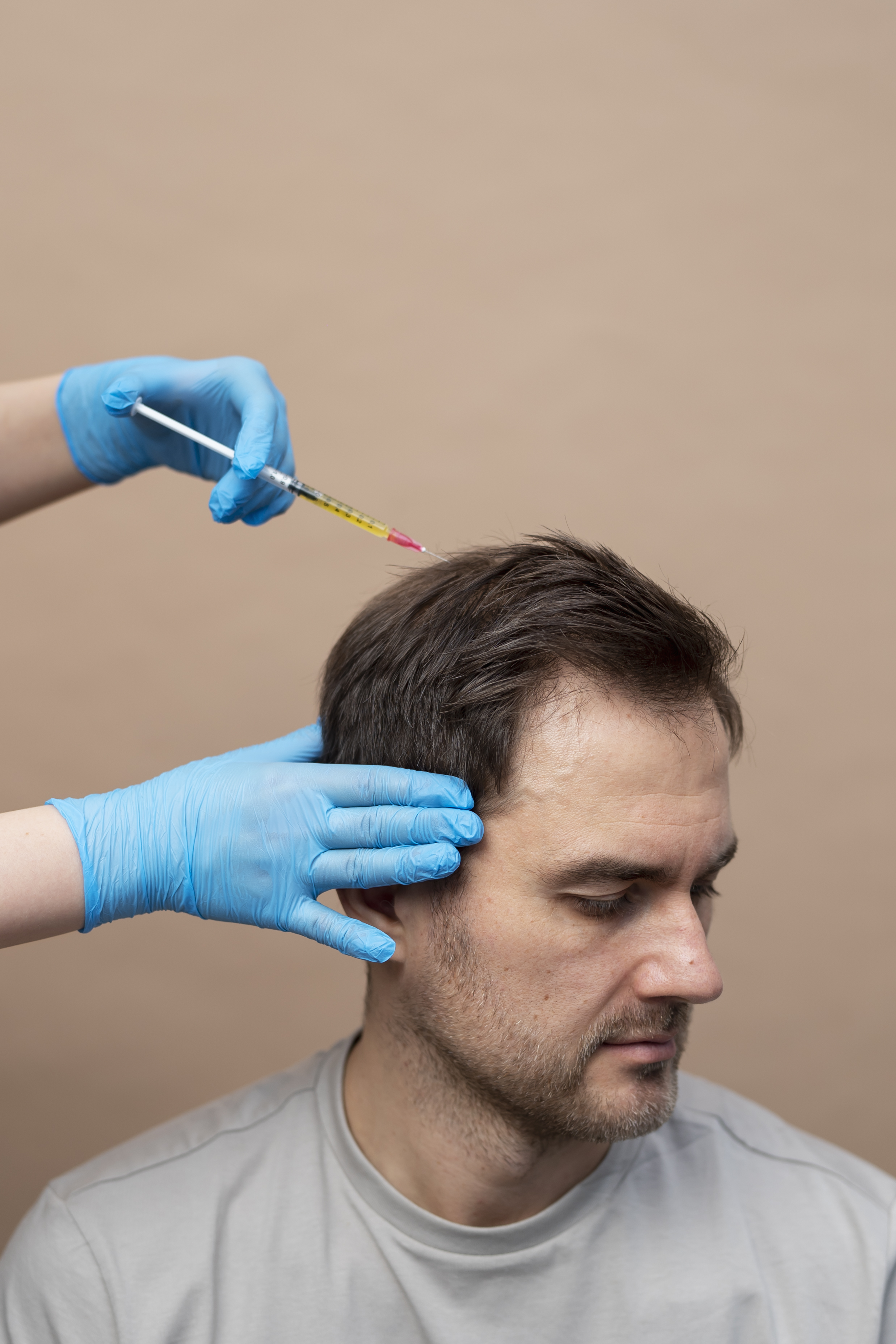
The procedure begins with trimming the donor area at the back of the scalp. After local anesthesia is applied, individual follicular units containing 1 to 4 hairs are extracted using a precision micro-punch tool measuring 0.7 to 0.9 mm. The grafts are then preserved in a temperature-controlled solution while the recipient area is prepared.
Small channels are created in the thinning or bald areas using fine blades, and each graft is implanted individually to match the natural angle and direction of existing hair growth.
FUE is commonly recommended for:
- Large bald areas, including crown restoration
- High graft count procedures of 3,000 to 5,000 grafts
- Moderate to advanced hair loss (Norwood 3 to 6)
- Patients seeking a proven and widely used hair restoration technique
The scarring associated with FUE is minimal. The donor area heals with tiny dot-like marks that gradually fade and are usually difficult to notice. No linear scar or stitches are required.
A consideration with FUE is that the donor area generally needs to be shaved. Because channel creation and graft implantation are performed separately, grafts spend slightly longer outside the scalp compared with DHI before placement.
The DHI Technique: Built for Precision and Density
DHI, or Direct Hair Implantation, takes the foundation of FUE and changes one crucial step – how the graft is implanted into the scalp.
The extraction process is identical to FUE. The difference begins during implantation. Instead of creating channels first and placing grafts later, DHI uses a specialized tool called the Choi Implanter Pen. Each follicle is loaded into the pen and implanted directly into the scalp in a single motion.
At Skafos, Korean micro-implanters are used to provide greater control over graft depth, angle, and direction. This level of precision is particularly valuable for hairline design and density-focused procedures.
DHI is particularly beneficial for:
- Hairline reconstruction requiring precise graft placement
- Beard, eyebrow, and mustache transplants
- Density enhancement in partially thinning areas
- Patients seeking reduced scalp trauma and quicker recovery
- Cases where shaving the recipient area is not preferred
Because grafts spend less time outside the scalp, DHI may offer a slight advantage in graft survival, especially in precision-driven procedures where every follicle matters.
The trade-off is time and cost. DHI is generally slower than FUE, which limits the number of grafts that can be transplanted in a single session, typically between 1,500 and 3,000 grafts. For larger bald areas, multiple sessions or a combined approach may be recommended.
FUE vs DHI Hair Transplant: A Side-by-Side Comparison
Here is a direct comparison of FUE and DHI hair transplant across the factors that matter most for patients in Coimbatore:
| Factor | FUE | DHI |
|---|---|---|
| Extraction Method | Micro-punch individual extraction | Same as FUE |
| Implantation Method | Channels created first, grafts placed after | Direct single-step via Choi / Korean pen |
| Graft Handling | Two-step process | Single-step and less time outside scalp |
| Shaving Required | Full donor area shave | Partial recipient area often optional |
| Best For | Large bald areas, high graft count | Hairlines, beard, targeted density |
| Grafts Per Session | Up to 3,000–5,000 | Typically 1,500–3,000 |
| Graft Survival Rate | High | Slightly higher |
| Recovery Time | 7–10 days | 5–7 days |
| Pain Level | Minimal (local anesthesia) | Minimal (local anesthesia) |
| Cost in Coimbatore | Moderate | Slightly higher |
Which Hair Transplant Technique Should You Choose - FUE or DHI?
This is the question that actually matters and it has a straightforward answer once you know your situation.
Go with FUE if:
You have moderate to advanced baldness, need large-area coverage like the crown or full scalp, want the maximum graft count in a single session, or are working with a budget without wanting to compromise on quality.
Go with DHI if:
Your priority is a precise, natural-looking hairline, you need beard or eyebrow restoration, you want to add density to a partially thinning zone, or you prefer faster recovery with slightly higher graft survival.
Go with a Hybrid (FUE + DHI) if:
Your hair loss is advanced but you also want a sharp, natural frontal hairline. FUE handles the high-volume areas like the crown while DHI handles the precision of the hairline giving you complete restoration in one planned approach.
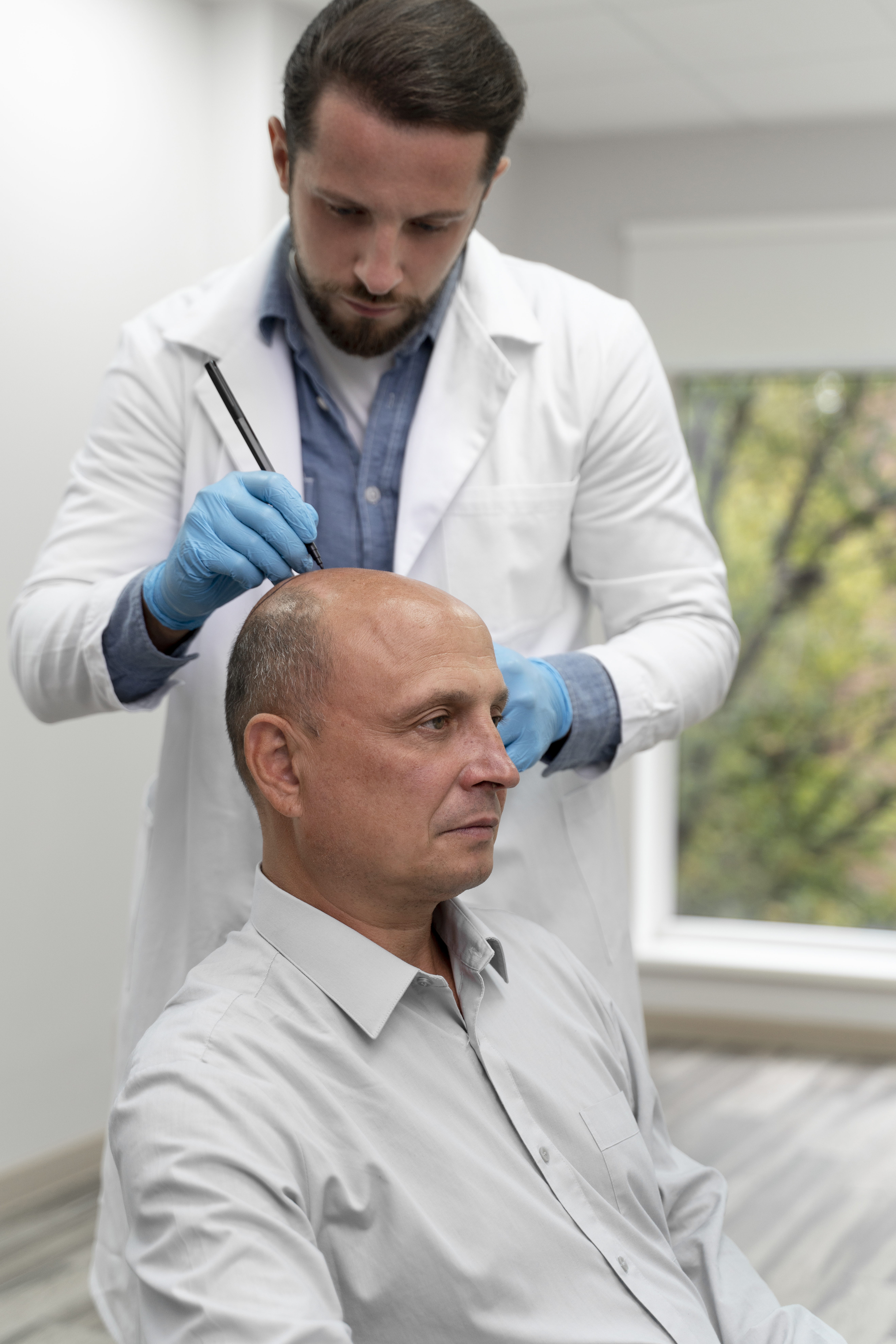
The most important point: the right technique is determined by your scalp – not by what's trending or what a clinic prefers. Every patient at Skafos undergoes a detailed scalp evaluation before any technique is recommended. We look at your donor density, extent of hair loss, graft requirement, and personal goals, then build a plan specifically for you.
How Long Does Recovery Take After FUE or DHI Hair Transplant?
Both FUE and DHI follow a broadly similar recovery path. DHI tends to be 2 to 3 days faster at each stage due to reduced scalp trauma from the single-step implantation.
FUE Recovery Timeline
| Timeline | What to Expect |
|---|---|
| Day 1–3 | Mild swelling and small scabs forming in the transplant area |
| Day 5–7 | Scabs begin falling off naturally. Do not pick them |
| Day 10 | Redness fades and the donor area continues healing |
| Week 2–4 | Shock loss begins. Transplanted hair sheds temporarily |
| Month 3 | New hair starts emerging from the follicle roots |
| Month 6 | Noticeable density improvement becomes visible |
| Month 9–12 | Final results become visible |
DHI Recovery Timeline
DHI follows the same recovery stages, usually 2 to 3 days ahead at each point. The overall growth timeline remains the same, with final results typically developing over 9 to 12 months.
One important thing to understand is that shock loss during weeks 2 to 4 is completely normal. The transplanted hair sheds, but the follicle roots remain intact beneath the scalp. New growth generally begins around Month 3 and continues improving for up to a year. This temporary shedding phase is a normal part of the recovery process.
Standard post-operative care applies to both techniques:
- Avoid direct sunlight on the scalp for the first 2 weeks
- Follow the prescribed washing routine from Day 3
- Avoid strenuous exercise for 2 weeks
- Do not scratch or rub the transplant area
- Take all prescribed medications as directed
- Attend all follow-up consultations
How to Prepare for Your Hair Transplant
A successful hair transplant depends not only on the procedure itself but also on proper preparation and aftercare. Following the right steps before and after your treatment can support healing, improve graft survival, and help you achieve the best possible results.
2 Weeks Before Your Hair Transplant
- Stop smoking and alcohol consumption, as both can affect blood circulation and slow the healing process.
- Avoid blood-thinning medications and supplements such as aspirin, fish oil, and vitamin E unless specifically approved by your doctor.
- Refrain from using hair coloring products, chemical treatments, or harsh styling products.
- Focus on getting adequate sleep, maintaining a healthy diet, and staying well hydrated.
1 Week Before Your Hair Transplant
- Inform your doctor about any medications or supplements you are currently taking.
- Avoid major haircuts or hairstyle changes that could affect treatment planning.
- Plan your schedule so you can rest comfortably after the procedure.
- Arrange transportation if you prefer not to drive home after treatment.
On the Day of the Procedure
- Eat a light, healthy breakfast unless instructed otherwise.
- Wear a loose-fitting, button-up or zip-up shirt to avoid contact with the treated area after the procedure.
- Avoid caffeine and energy drinks before your appointment.
- Arrive relaxed and follow all instructions provided by your medical team.
During the First Week After Treatment
- Sleep with your head slightly elevated to reduce swelling.
- Avoid touching, scratching, or rubbing the transplanted area.
- Follow the prescribed washing routine and post-procedure instructions carefully.
- Take all medications exactly as directed.
During Weeks 2 to 4
- Avoid swimming pools, steam rooms, saunas, and prolonged sun exposure.
- Continue avoiding heavy workouts, strenuous exercise, and activities that cause excessive sweating.
- Do not be concerned if transplanted hairs begin to shed. Temporary shock loss is a normal part of the hair growth cycle.
- Attend all scheduled follow-up appointments to monitor progress.
Why Patients in Coimbatore Choose Skafos for Hair Transplant
There are several hair transplant clinics in Coimbatore. What makes patients consistently choose Skafos comes down to four things:
- Doctor-led from start to finish: At Skafos, Dr. Nivedha and team are hands-on through every step – scalp analysis, graft extraction, and implantation. Not just the consultation.
- The technique chosen for your scalp is not for our convenience: We offer FUE, DHI with Korean micro-implanters, and hybrid approaches. What we recommend is based entirely on what your scalp analysis shows, nothing else.
- Transparent pricing – no hidden charges: You receive a complete graft plan and full cost breakdown before anything begins. What we quote is what you pay.
- Support through full recovery: We stay with you through every stage – shock loss, growth monitoring, and follow-up consultations until you see your final results.
If you want an honest conversation about what suits your scalp, come in for a free consultation. No pressure. Just clarity.
Conclusion
FUE and DHI are both proven techniques, but the right one is always the one chosen for your scalp, not for convenience. Whether you need large-scale coverage, a precise hairline, or a combination of both, what truly determines your result is the quality of planning and the expertise behind the procedure.
At Skafos Aesthetic & Cosmetic Surgery Center, Coimbatore, we start with an honest scalp assessment and build a plan designed to give you natural, lasting results with full transparency on cost and complete support through recovery.
Book Your Free Consultation at Skafos Today → Come in. Let us look at your scalp and give you a clear, honest plan – no pressure, no commitment.
Frequently Asked Questions (FAQs)
Neither is universally better. FUE suits larger bald areas needing high graft count. DHI suits precision hairline work and density packing. The best technique depends on your scalp condition and hair loss stage – confirmed through a proper scalp analysis at Skafos.
Yes. Transplanted follicles are genetically resistant to hair fall and grow permanently with normal care. Long-term results depend on graft survival rate which is highest when performed by experienced doctors using proper technique and post-operative support.
New hair growth begins around Month 3. Noticeable density improvement is visible by Month 6. Full results develop over 9 to 12 months as transplanted follicles complete their growth cycle. Shock loss in weeks 2 to 4 is normal and temporary.
No. Both FUE and DHI are performed under local anesthesia, so the procedure itself is comfortable. Mild soreness in the donor area may occur for 2 to 3 days after. Most patients resume normal activity within a week.
Graft count depends on your baldness stage, donor density, and desired coverage. Mild hair loss may need 1,000 to 1,500 grafts. Advanced baldness can require 3,000 to 5,000. A detailed scalp analysis at Skafos will give you an accurate graft estimate.


